Somewhere between a LinkedIn thought-leadership post and a TikTok trend audio, a myth took hold. It says artificial intelligence is about to replace the human side of social media entirely. Content, strategy, community — all automated. All optimized. All done by machines by 2027.
It’s a compelling story. It’s also not what’s actually happening.
What’s happening is more interesting. It’s also more useful for any brand trying to build real presence online. AI isn’t replacing the human layer of social media. It’s replacing the slow layer: the bottleneck of production, the guesswork of targeting, the hours lost to manual testing. Once the machine takes over the grunt work, something opens up. There’s more room for the one thing AI still can’t manufacture — a point of view.
At ELLA & ELLOS, we use these tools every day. Not as a novelty, but as part of how we build Blue Ocean positioning for the brands we work with. So let’s separate the signal from the noise, platform by platform.
Blog The Future of AI in Social Media: Why "100% Automated" Is the Wrong Question
The idea that AI will fully replace human involvement in social media rests on a false assumption. It assumes social media’s job is to produce content. It isn’t. Its job is to build trust, and trust is a human currency.
AI can generate a video in minutes. It can write ten headline variations before your coffee gets cold. It can predict which creative will outperform the rest. But it can’t decide why your brand should exist in someone’s feed in the first place. It can’t read a cultural moment before it becomes obvious. And it can’t make a stranger feel understood by a business they’ve never met.
Industry data backs this up. Most marketers now use AI daily and say it helps them produce significantly more content. But most of them also agree: AI augments their work, it doesn’t replace their judgment. The tools have gotten dramatically better. The strategic decisions around them haven’t become any less human — they’ve become more valuable. Good judgment is now the scarce resource, not content volume.

Meta has moved further and faster than any other platform toward full-funnel automation. Its Advantage+ suite already handles audience targeting, placement, budget and creative testing as one AI-driven system. And Meta has stated its ambition clearly: by the end of 2026, brands should be able to generate an entire ad — image, video, copy, targeting — with a fraction of today’s manual effort.
In practice, this means new tools. One turns a handful of product photos into a polished, multi-scene video ad. Meta’s own research labs have built image-restyling models. And an AI business assistant is now expanding to advertisers and agencies worldwide.
The advantage: speed and scale no in-house team can match manually, plus real gains in return on ad spend for advertisers who adopt these tools early.
The risk: sameness. When every competitor uses the same generative engine, the differentiator stops being what you produce. It becomes how well you brief it — the strategic layer, not the technical one.
Blog The Future of AI in Social Media: Why "100% Automated" Is the Wrong Question
TikTok’s Symphony suite may be the most sophisticated creative AI system any platform has built for its own content logic. Symphony Creative Studio generates TikTok-native video from a prompt or existing assets. Symphony Assistant handles scripting and trend research. And the newly launched Symphony Agent goes further still: it reads performance signals, matches brands with creators, and coordinates a campaign end to end.
What sets this platform apart is the training data behind its AI: TikTok’s own cultural signals — trending sounds, formats, native visual language — rather than generic video generation. TikTok also builds in transparency by default. Every generated video automatically carries AI labelling, invisible watermarking, and content credentials.
The advantage: production speed that used to take a full creative team now takes hours, with cultural relevance built in from the start.
The risk: velocity without a voice becomes noise. TikTok rewards authenticity above almost any other platform. An AI-perfect video with no human perspective behind it tends to underperform a rougher one that actually says something.
YouTube has shifted its AI investment toward the viewing experience itself. Think conversational AI search, smarter recommendations, and AI agents that creators are starting to use to manage storefronts and audience interaction in real time.
For brands, this changes the SEO conversation. Optimizing a YouTube presence now means thinking about how conversational search interprets your content — not just which keywords sit in your title.
The advantage: better-matched discovery between the right content and the right viewer, at platform scale.
The risk: long-form video still demands genuine expertise and narrative pacing. Generative tools handle both poorly. YouTube remains the platform least forgiving of shallow, AI-only production.
Here’s the most underrated shift of the past year: LinkedIn has overtaken YouTube as B2B marketers’ primary video channel. A major 2026 industry analysis of video usage confirms it. Alongside this shift, LinkedIn has rolled out AI-powered planning tools. These include reach forecasting before a campaign launches, AI-generated performance digests, and a Creator Marketplace connecting brands with professional creators.
The advantage: for B2B businesses, this is the platform where AI-assisted content now meets serious buying intent.
The risk: LinkedIn’s audience spots generic, AI-flattened corporate voice fast. Thought leadership only works when the leadership part is real.
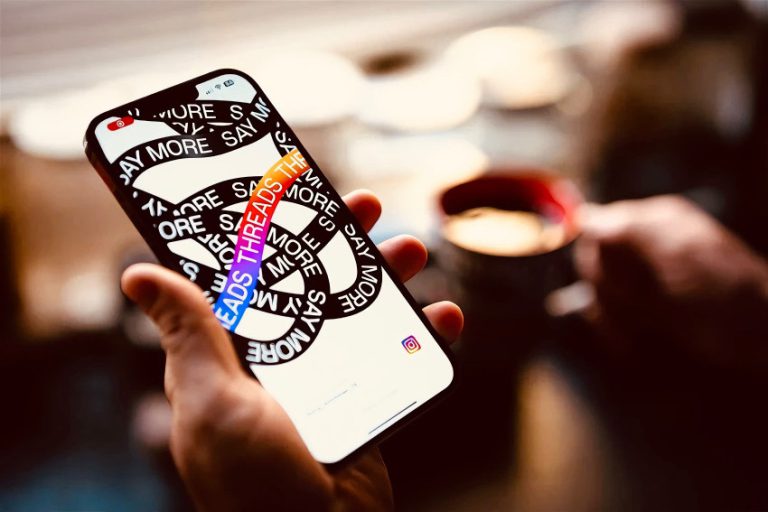
Threads is scaling fast as an advertising surface. It has already crossed 400 million monthly active users, and Meta is extending its AI ad tools into the platform as a natural extension of the Instagram/Facebook ecosystem. It’s becoming a legitimate channel, not just an X alternative.
Pinterest is placing a different bet. It treats AI as an infrastructure layer, not just a content generator. New tools connect campaign data directly to the AI copilots marketers already use. Other models dynamically select the best-performing creative variant for each individual viewer. Pinterest’s leadership frames it simply: in the AI era, context and taste shape discovery — not keywords alone.
Why does this matter for niche, high-intent brands like boutique hotels, interior designers, and luxury retail? Because Pinterest’s AI investment plays directly into visual discovery — exactly the strength these businesses need.
No. And the platforms building these tools don’t even believe that themselves. Every major AI rollout across Meta, TikTok, YouTube, LinkedIn and Pinterest in 2026 tells the same story: augmentation, not replacement. Speed, not judgment.
AI is automating the expensive, repetitive layer of social media work — production, testing, targeting. Humans still own the layer that was always the real differentiator: the strategic thinking behind why a brand shows up the way it does, and the authenticity that makes a stranger stop scrolling.
The businesses that win the next chapter of social media won’t be the ones using the most AI. They’ll be the ones who use AI to free up time for sharper strategy — and then fill that time with genuine creative thinking, not more automated output.
That’s the philosophy behind how we work at ELLA & ELLOS. We treat AI as a daily collaborator in our process — never as a replacement for the strategic and creative judgment our clients actually pay for. Where fresh thinking goes digital, the thinking still comes first.