Every marketing team we speak to eventually asks the same question: Which AI tools are genuinely worth using for social media, and which ones simply generate noise?
It is a fair question. In less than two years, AI has transformed from an emerging technology into an essential part of modern content creation. At the same time, the number of available platforms has grown at an extraordinary pace. Almost every new tool claims it will revolutionise your social media strategy. In reality, however, very few live up to that promise.
The real shift lies elsewhere. Today, the question is no longer just what an AI tool can do. More importantly, it is who it is designed for. A freelance consultant publishing a few posts each week needs very different solutions from an in-house marketing team with dedicated designers and video specialists. Yet many businesses still treat AI as a one-size-fits-all solution. As a result, they often invest in software that adds complexity rather than value.
At ELLA & ELLOS, AI is part of our daily workflow. Throughout 2026, we tested and compared a wide range of platforms to identify the ones that genuinely help specialised service businesses create better content more efficiently. We also evaluated how well they support teams with different levels of experience. This guide brings together the insights we gained along the way.
Blog What AI-powered tools are emerging for content creation on social platforms?
The biggest change in 2026 is not a single breakthrough AI tool. Instead, it is the way businesses are beginning to work with the platforms they already use. The industry is moving towards integration rather than fragmentation.
Only a couple of years ago, a typical social media workflow involved several different applications. One platform was used for captions, another for images, a third for scheduling, and yet another for analytics. The result was a process that was both time-consuming and unnecessarily complicated.
Today, that picture looks very different. Platforms such as Buffer, Hootsuite and SocialPilot have integrated AI directly into their scheduling environments. Captions, hashtags and publishing recommendations can now be created within a single workflow. As a result, teams spend far less time switching between multiple tools.
For small and medium-sized businesses, this is where the real productivity gains lie. Many simply do not have a dedicated social media manager or an in-house content team. Consequently, the greatest benefit rarely comes from the most advanced AI feature. Instead, it comes from a workflow that is faster, simpler and easier to manage.
Our advice is straightforward. Before subscribing to another AI platform, take a closer look at the software you already use. Many features that once required separate applications are now built into existing tools. Making full use of those capabilities often saves both time and money while reducing the complexity of day-to-day content production.
When businesses first begin using AI for content creation, they do not need highly specialised software. For most teams, general-purpose language models such as ChatGPT and Claude provide the best starting point. They require virtually no setup, involve very little learning, and are flexible enough to support a wide variety of content tasks.
That flexibility is precisely what makes them so valuable. Within the same conversation, they can generate Instagram caption ideas, draft a thought leadership article for LinkedIn, or produce the first version of an advertising campaign. For freelancers and small businesses in particular, they often represent the most practical and cost-effective solution.
As organisations grow, however, their requirements change. Once several people are creating content or brand consistency becomes a strategic priority, a general-purpose AI model is no longer enough.
This is where platforms such as Jasper come into their own. Unlike conversational AI, these tools are designed around a company’s unique brand voice, target audience and existing content. Setting them up requires more time, but the investment pays off by ensuring that every piece of content feels consistent, regardless of who created the first draft.
This distinction is often underestimated. A strong brand voice is not built simply by writing individual posts well. It comes from ensuring that every piece of communication feels like it belongs to the same business. That is where dedicated brand-writing platforms deliver their greatest value.
Our recommendation therefore depends on where your business is today. If you are working independently or are just getting started with AI, ChatGPT or Claude are likely to be your best option. As your content output grows and brand consistency becomes increasingly important, investing in a specialised platform such as Jasper becomes far easier to justify.
Blog What AI-powered tools are emerging for content creation on social platforms?
Visual content creation has changed just as dramatically. Until recently, design was often the most time-consuming stage of the content production process. Today, AI-powered tools have streamlined much of that work, making it possible to produce high-quality visuals far more efficiently.
The key point is that there is no single “best” design platform. Instead, today’s tools cover a broad range of skill levels. Choosing the right one depends far more on your team’s experience than on the software’s feature list.
For beginners, Canva’s Magic Studio offers one of the most accessible entry points. Even without formal design training, users can create brand-consistent graphics, resize them for multiple platforms, and maintain a cohesive visual identity. For businesses that publish content regularly and value speed as much as quality, Canva remains an excellent choice.
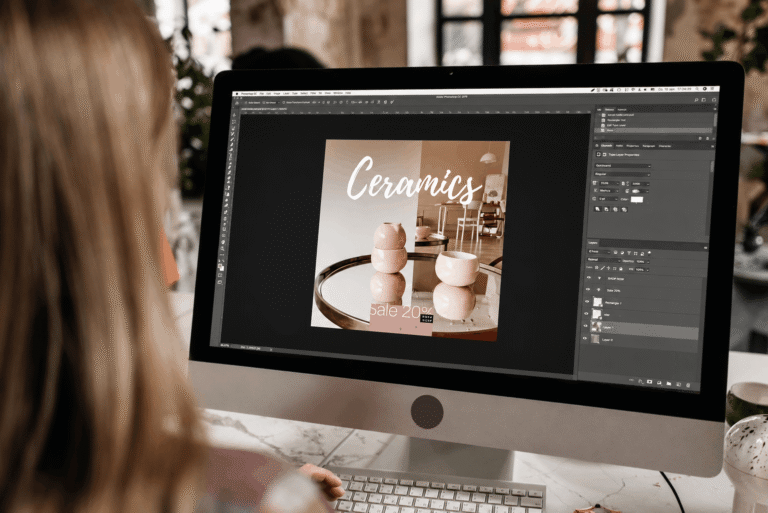
At the professional end of the market, Adobe Photoshop has evolved in a different direction. Its Firefly-powered features, including Generative Fill, Generative Expand and Generative Remove, allow designers to edit, extend and transform images using simple text prompts. Meanwhile, the new Firefly AI Assistant can coordinate complex editing workflows across Photoshop, Illustrator and Premiere through a single conversational interface.
It is important to understand what these tools are designed to do. They are not intended to replace creative professionals. Instead, they help experienced designers work faster by removing repetitive tasks and accelerating production without compromising creative control.
For the industries we work with, this distinction is particularly valuable. A boutique retailer, a hotel or a specialised service business does not necessarily need a full-time designer. What matters is choosing the right tool for the right task. Canva is ideal for day-to-day content creation, while Photoshop delivers greater creative control for campaign visuals and more sophisticated projects. Used together, they enable businesses to maintain both quality and consistency without slowing down production.
No area of AI has evolved more rapidly in 2026 than video creation. At the same time, the gap between beginner-friendly tools and professional platforms has never been wider.
For businesses with little or no editing experience, applications such as CapCut have made video production remarkably accessible. A smartphone recording can now be transformed into a polished Reel, TikTok or YouTube Short with minimal manual editing. Traditional editing timelines are becoming increasingly optional.
Avatar platforms such as HeyGen take this one step further. They allow businesses to maintain a consistent on-screen presence without recording every new piece of content from scratch. For educational content, multilingual communication and regular publishing schedules, this can significantly reduce production time.
Professional teams, however, now have access to an entirely different generation of AI video tools. Google’s Veo 3.1 is capable of producing high-resolution vertical videos complete with synchronised dialogue, environmental sound and cinematic realism. At the same time, Kling 3.0 supports significantly longer sequences than many competing platforms, making it particularly useful for product demonstrations, storytelling and more complex creative projects.
One recent development is also worth noting. In April 2026, OpenAI discontinued the standalone web and mobile versions of Sora. Businesses that previously relied on those workflows should already have migrated to alternative solutions.
Despite these advances, we believe the greatest value of AI video lies elsewhere. For most organisations, fully AI-generated videos are still not the most practical application. The real productivity gains come from intelligent editing. Today’s AI tools can automatically transform a single long recording into multiple short, platform-specific clips. For many marketing teams, that capability saves considerably more time than generating an entire video from a text prompt.
This is where many “Top 10 AI Tools” articles miss the bigger picture. The tools themselves are not the strategy. Nor is choosing the most advanced platform available.
A faster caption generator will not solve an unclear market position. A more powerful video editor will not create a memorable brand. Even the most sophisticated image generator cannot decide which story will resonate with your audience.
AI delivers its greatest value when it takes repetitive work off your team’s hands. Drafting initial copy, adapting content for different formats, scheduling posts and producing first-cut video edits can all be completed far more efficiently than before. As a result, businesses gain time to focus on the work that still requires human insight.
That work includes understanding the real challenges your audience faces, developing an authentic brand voice and designing customer journeys that build trust and encourage meaningful action. These are the activities that continue to create competitive advantage, regardless of how quickly AI evolves.
This is precisely why, at ELLA & ELLOS, we see AI as part of a broader Blue Ocean Strategy rather than a strategy in itself. Technology should accelerate execution. It should never replace strategic thinking.
Whether we are working with a veterinary hospital, a boutique hotel, a premium retailer or another specialised service business, our approach remains the same. AI should shorten the distance between an idea and its execution. It should never determine what is worth communicating in the first place.

If you are deciding where to begin, resist the temptation to choose the newest or most sophisticated platform. Instead, identify where your team currently loses the most time or energy, then select the solution that addresses that specific challenge.
Writing and Brainstorming
If you are just getting started or working independently, general-purpose AI models such as ChatGPT and Claude are usually the most effective choice. They are flexible, easy to use and capable of supporting everything from content ideas to first drafts across multiple formats.
As your business grows and maintaining a consistent brand voice becomes more important, platforms such as Jasper become a worthwhile investment.
Visual Content
If speed, simplicity and consistency are your priorities, Canva is difficult to beat. It allows non-designers to create professional-looking content quickly while maintaining a cohesive visual identity.
If your team already has design expertise and requires greater creative control, Photoshop’s AI-powered features provide significantly more flexibility for advanced editing and campaign production.
Video
For businesses with little editing experience, CapCut and avatar platforms such as HeyGen offer an accessible starting point.
Teams looking for more creative freedom and cinematic production quality may benefit from platforms such as Veo or Kling. However, these tools require a greater investment of time to master and should only be adopted when they genuinely support your content strategy.
Planning and Publishing
The same principle applies to content management. Rather than combining several disconnected applications, most businesses will benefit from an integrated platform that brings AI assistance, scheduling and analytics together in one place.
Our recommendation is simple. Start by solving your biggest bottleneck. Choose the tool that removes that obstacle most effectively. Investing in the most advanced software before your business actually needs it rarely leads to better content. More often, it simply creates a steeper learning curve.
Within the next year, virtually every business in your industry will have access to similar AI technologies. That means the tools themselves are unlikely to become a lasting competitive advantage.
The real difference will come from elsewhere.
The brands that succeed will be those that understand their audience more deeply, communicate more consistently and create content that genuinely reflects who they are. Those qualities cannot simply be downloaded through software.
AI can help you produce content faster. It can streamline workflows, eliminate repetitive tasks and improve efficiency across your marketing activities. What it cannot do is decide which ideas deserve to be shared or which stories will genuinely matter to your audience.
That responsibility still belongs to people. It always will.
If your goal is to build a content system that reflects your brand, supports your business objectives and matches your team’s level of experience, don’t start with the latest AI trend. Start with your strategy.
That philosophy sits at the heart of everything we do at ELLA & ELLOS.